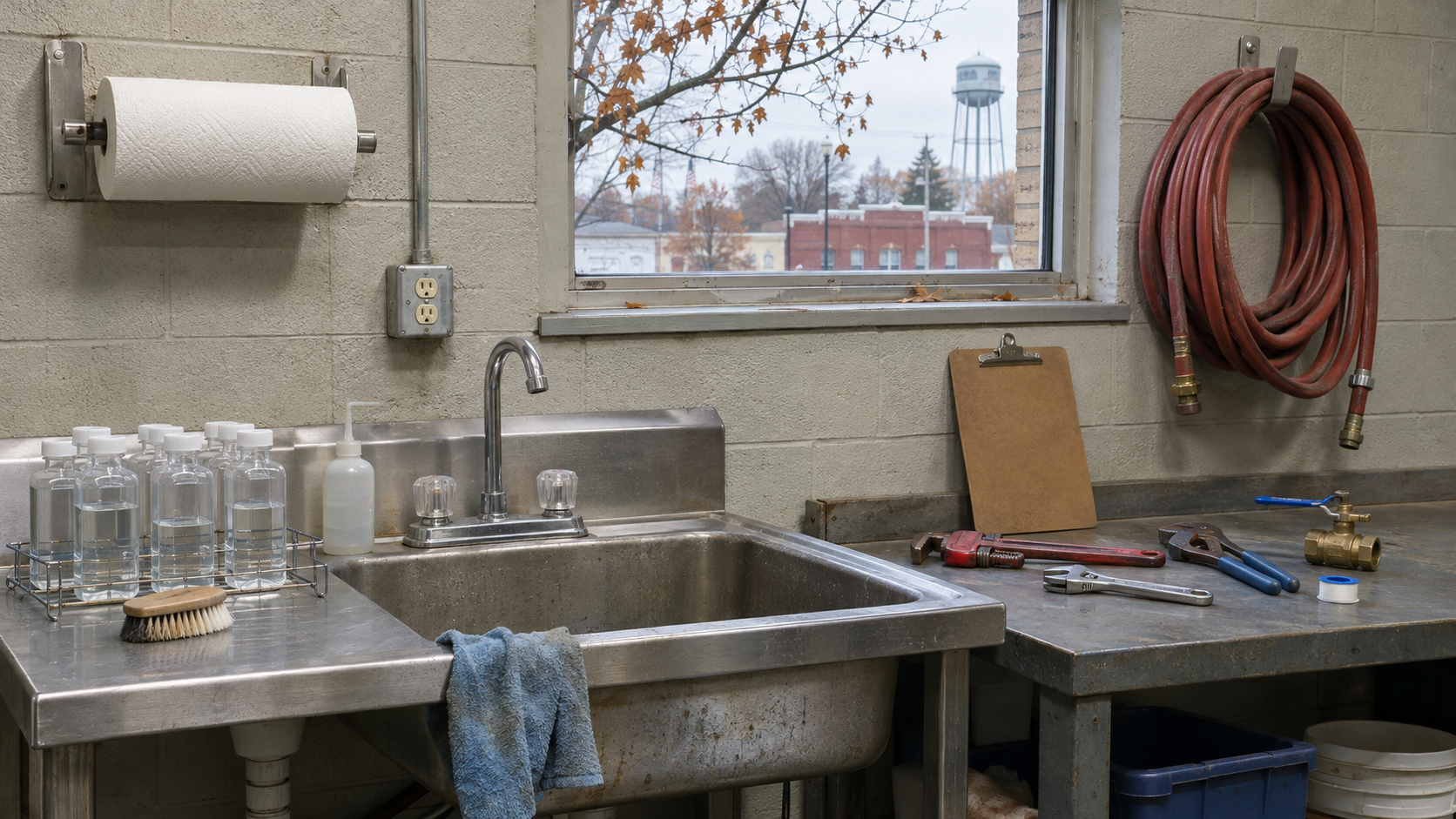
WEXLER, Ohio — The municipal water utility has limited service on two residential blocks after tap water flowed over sinks, cups and clothing without making them wet for periods of up to two minutes. The water later soaked every surface it had touched, sometimes after residents had carried the items elsewhere.
The first report came Saturday morning from Marisol Wynn, who was filling a glass at her kitchen faucet on Alder Street. Wynn said the stream looked and sounded ordinary, and the glass became heavier as it filled. When she poured it out, the inside of the glass remained dry enough to squeak under her finger. About 70 seconds later, droplets formed across the empty glass and the counter beneath it.
Three neighboring households described the same delay. A dish towel held under a running tap stayed pale and light until its owner set it on a chair; the towel and chair cushion then became wet together. Water poured into a pet bowl could be seen inside it, but a paper label fixed below the rim did not darken until after the bowl had been moved to another room.
Utility supervisor Lena Rusk shut two valves, opened a hydrant at the end of the block and advised residents to use bottled water while crews sampled the line. The city delivered cases to 31 addresses and asked people not to test clothing, electronics or flooring. No loss of pressure, discoloration or unusual odor was reported.
One resident slipped when a previously dry kitchen floor became wet beneath him several minutes after he had wiped up a spill. He declined medical treatment. The city placed absorbent mats in the lobby of a senior apartment building and temporarily closed its laundry room, where water entered two machines without dampening the loads until the cycles had stopped.
Surfactants, oils and coatings can prevent water from spreading on a surface, said Priya Kelm, an environmental chemist retained by the utility. Air trapped in fabric may also delay absorption. Kelm said those effects cannot make a filled container remain dry to the touch or cause separate materials to become wet simultaneously after the water has been removed.
Laboratory checks found ordinary pH, chlorine and mineral readings in samples taken upstream and within the affected blocks. Water collected in sealed bottles gained no weight when droplets later appeared on the bottles' exteriors. A sample poured onto clean stainless steel remained in a shallow moving sheet while the metal beneath it registered dry on a moisture strip.
The condition has not followed all water from the main. A fire line and three outdoor spigots wetted surfaces immediately. Cold taps produced the longest delays, while hot water left steam on mirrors before the glass itself became damp. At one house, water from the kitchen behaved normally while the bathroom supply did not.
Crews replaced a pressure regulator and flushed the line Sunday, then restored service for 20-minute intervals. Rusk said the utility is treating delayed wetness as a slip and sanitation hazard rather than a water shortage. Residents will receive bill credits for the outage, and the bottled-water station will remain open at the public works garage through Tuesday.
During the final flush, workers directed a hose onto dry gravel beside the hydrant. The clear stream ran between the stones and entered a storm grate without darkening the ground. The hose was closed, drained and coiled on the truck. Ninety-four seconds later, the gravel turned dark from the grate back toward the hydrant, against the slight slope.
The dark line stopped at the truck's rear tire. Water then appeared beneath each loop of the empty hose, leaving the rubber dry on top and wet on the pavement below. Crews left the hose in place and marked the edge of the wet area. By Monday morning, the pavement had dried except for a narrow ring beneath the brass nozzle, which remained capped.