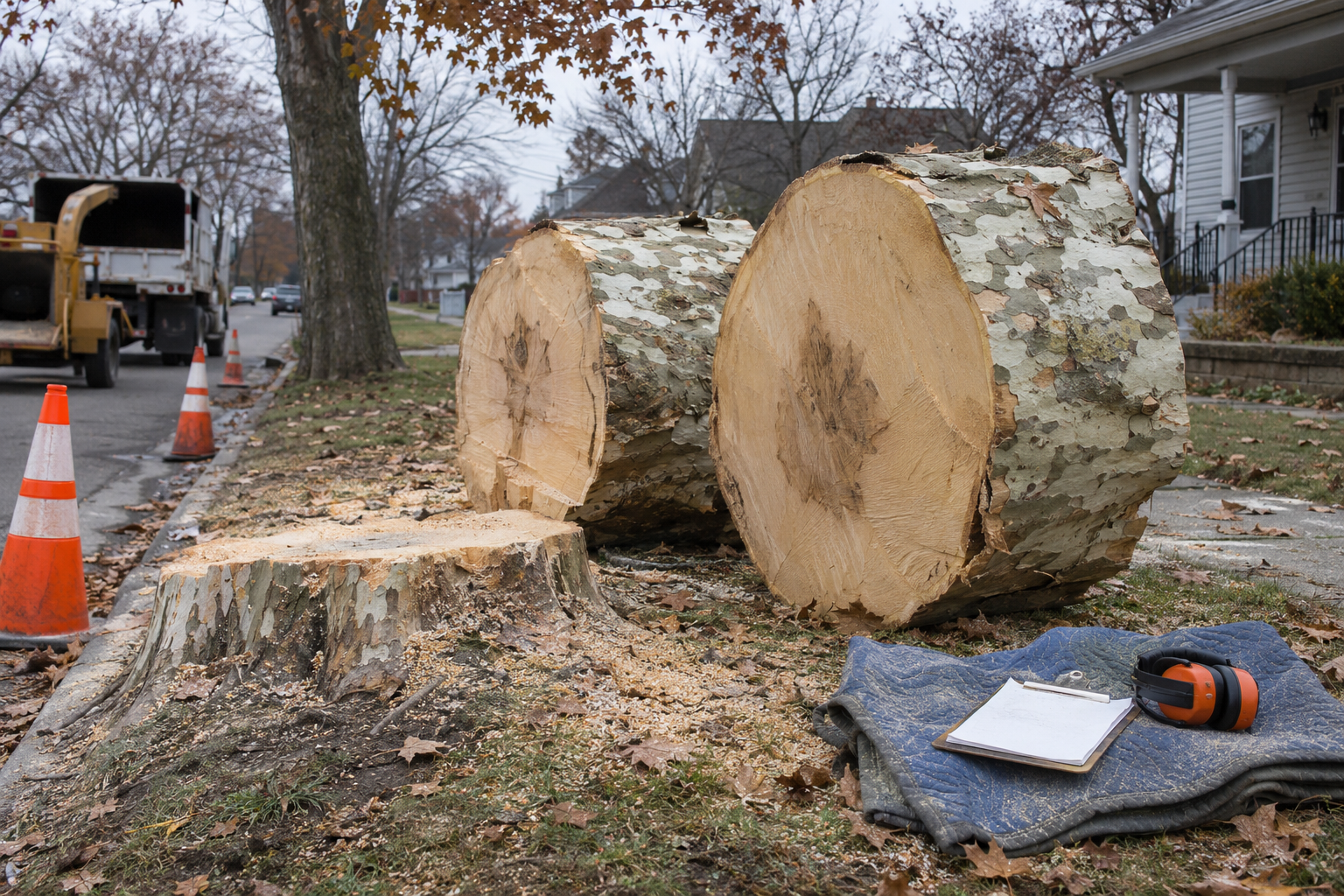
ELM CAIRN, Ohio — The city has paused removal of a storm-damaged sycamore on Linden Avenue after cut sections of the trunk carried fragments of conversations that residents said had occurred beneath the tree over several decades. Crews reopened one traffic lane but left the stump and three large rounds fenced at the curb while the city arborist documents the wood.
The sycamore lost a main limb during Sunday's wind and split above a cavity near its base. Public works closed the block Monday morning and brought down the remaining crown after an inspection found that the trunk could not be stabilized. The tree stood between two houses and shaded a bench used by bus riders, schoolchildren and residents of a nearby senior building.
Crew leader Quentin Saye first heard a voice after a trunk round was lowered onto the steel bed of a loader. Saye said the wood gave a short scrape, followed by a woman reciting a grocery list in a conversational tone. The sound seemed to come from the fresh cut rather than the loader radio, which was off. Three workers heard the same list, including the words tea, onions and blue soap.
Linden Avenue resident Clara Mott recognized the voice as her mother, who died in 2008. Mott said her mother waited for the Number 6 bus beneath the sycamore and often reviewed errands aloud so she would not need to write them down. The city did not play Mott a recording before asking what she remembered; two items on her list matched the crew's separate statements.
Other sections carried different sounds when moved. A smaller limb produced a child's multiplication practice followed by a bicycle bell. One round gave several seconds of a labor negotiation that retired transit mechanic Russ Bale said took place on the bench during a 1996 strike. Bale identified one speaker by a habit of clearing his throat before saying a contract number that is also audible on the crew recording.
Public works stopped cutting after residents began gathering at the barricade and asking to hear particular years. Director Helena Dray said the city will not operate the loader for demonstrations or invite people to search the wood for private conversations. Brush already chipped before the reports had been moved into covered trucks, and no mulch from the tree will be distributed until the review is complete.
Wood can transmit vibration along its grain and sometimes release stress with clicks that resemble speech rhythms, said Felice Banner, a consulting arborist who examined the stump Tuesday. Machinery, nearby radios and expectation can make indistinct sounds seem meaningful. Banner said those effects would not ordinarily produce several intelligible voices from separate pieces or details that listeners supplied only afterward.
The sounds were not simple recordings that repeated on demand. When workers set the grocery-list round down a second time, it carried the closing bars of a hymn instead. Mott did not recognize the singer. An employee at the senior building did, identifying a former tenant who sat under the tree after supper and sang only when traffic was heavy enough to cover her voice.
Dray said the city still intends to remove the stump because its roots have lifted the sidewalk and entered a storm lateral. Officials are considering whether to retain a cross-section for the municipal archive, but the archive does not ordinarily accept material that may contain the speech of living residents. The city law director advised staff to treat the recordings as incident documentation rather than oral histories.
Crews wrapped the three rounds in moving blankets Tuesday and placed vibration pads beneath them. The block remained quiet until a school bus braked at the temporary stop. As its engine idled, one covered round produced eight handclaps and a man's voice calling for neighbors to move closer together. A photograph supplied later by Bale shows a 1983 block party under the tree, with eight people beginning a clapping game around the bench.
The bus pulled away before workers could make a second recording. No further voice came from the covered rounds, though the stump answered each passing truck with a low wooden pulse. By Wednesday afternoon, fresh sawdust around its cut face had settled into narrow bands. When Mott stepped inside the barricade to sign the city's witness form, the bands trembled in time with the hymn she had said she did not know.