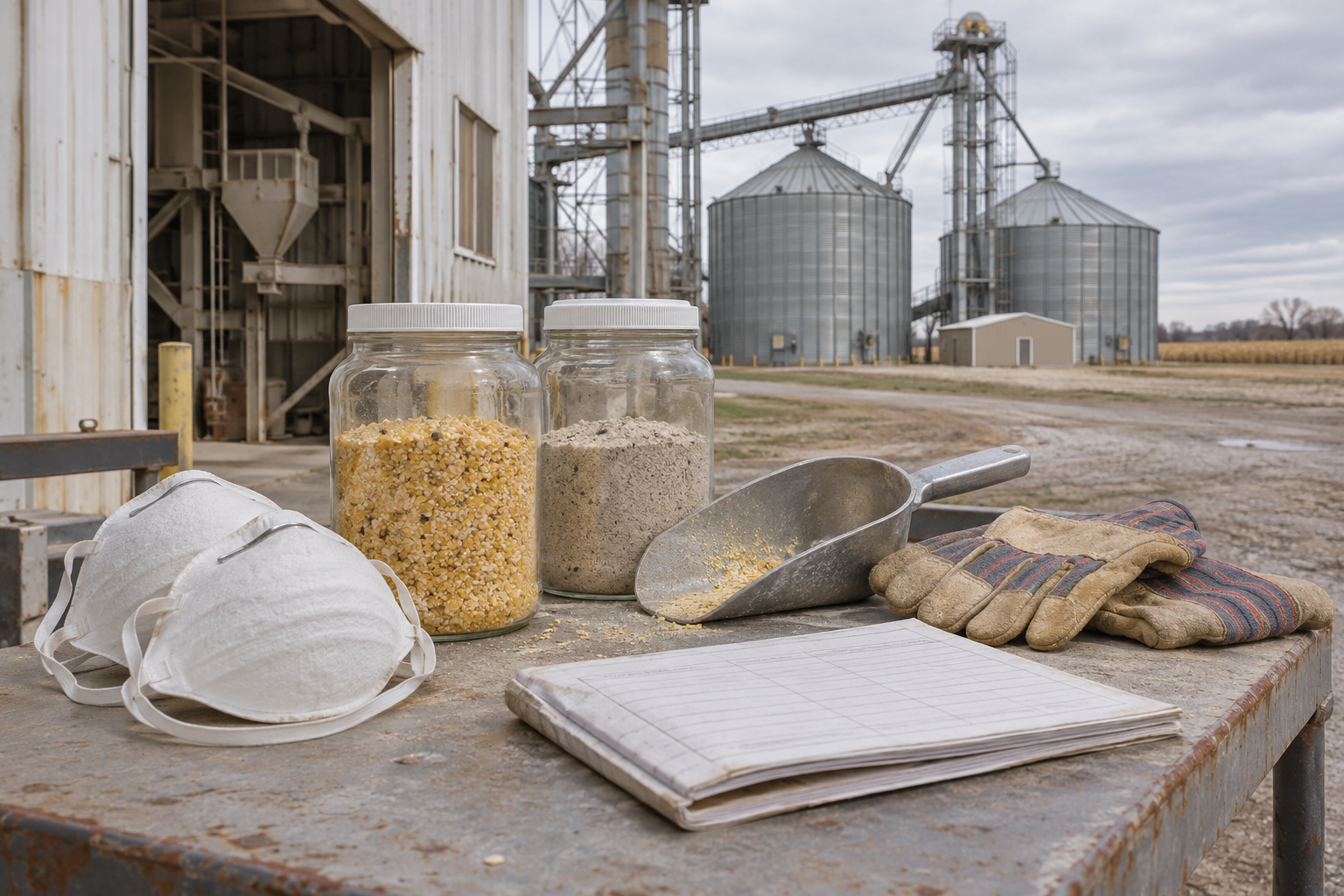
RED CEDAR, Nebraska — A livestock feed mill has shortened blending shifts and held three rations after employees developed specific appetites associated with the animals scheduled to receive each batch. Workers described urges to chew salt, dry straw and fence wood; the sensations stopped when they left the blending floor.
Red Cedar Feed & Grain makes custom cattle, hog and sheep rations for farms in four counties. The mill placed its older ribbon blender out of service Friday and retained 41 tons of finished feed. Receiving, bagged mineral sales and a separate poultry line remain open, manager Tessa Voss said.
Mixer operator Cal Wynn first noticed a strong desire for loose mineral salt while loading a beef ration Thursday afternoon. He had eaten lunch and was not thirsty. The sensation grew as the batch turned and stopped when he entered the office, then returned when he went back wearing a new paper mask.
Two other workers reported different appetites during the next blend. Rosa Keene said dry alfalfa stems seemed as appealing as fresh bread, though she did not eat them. Len Cole found himself studying the wooden handle of a floor broom and could identify, by smell, the side worn smooth by years of hands. All three kept their ordinary sense of taste.
The mill stopped the line after a loader reached into his lunch box and bit through the paper wrapper around a salt packet. He was not injured and did not swallow the paper. Voss sent the shift home with pay, sealed the dust collector and contacted the mill's occupational-health contractor and customers assigned to the three lots.
Feed dust can irritate the mouth and nose, and mineral exposure may produce a metallic or salty taste, said Elise Marr, an industrial hygienist who inspected the mill. Heat, dehydration and suggestion can also change appetite. Marr said those effects would not usually produce separate cravings that followed individual formulas or disappear at the doorway.
The held rations were ordinary formulations. The cattle blend contained corn, alfalfa and mineral supplement. A sow ration was high in ground grain, while a sheep lot contained no animal protein or medication. Ingredient certificates, moisture readings and magnet checks showed no unexpected material, and the blender had been cleaned before the first report.
Customers described behavior matching the workers' sensations. Cattle assigned to the first ration had recently begun licking a new mineral block. Sheep receiving the second farm's prior delivery had stripped bark from two untreated fence posts after snow covered their pasture. The farmers had not reported either detail to the mill before employees gave written accounts.
Marr repeated a short empty-blender test with no feed present. Workers remained outside while she ran the motor and sampled air at the access door. Nobody reported an appetite. When a sealed jar from the cattle lot was set on the idle platform, Wynn's mouth filled with a salt taste from 15 feet away, and the jar's paper seal drew inward without breaking.
The mill issued fitted respirators for cleanup, but the sensations did not depend on visible dust. Keene felt the urge to chew straw while viewing the sheep sample through the control-room window. A contractor who did not know the formulas reported wanting cold water and pond weed near a hog ration intended for animals whose outdoor drinker had frozen that morning.
Voss will keep the blender idle until the lots are removed and the dust system is inspected. At closing Monday, the unused paper masks were counted and left in their sealed carton. Tuesday morning, one mask lay on top of the box. Its inner cup was damp and carried two broad, flat impressions like cattle molars; the elastic bands remained folded from the factory.