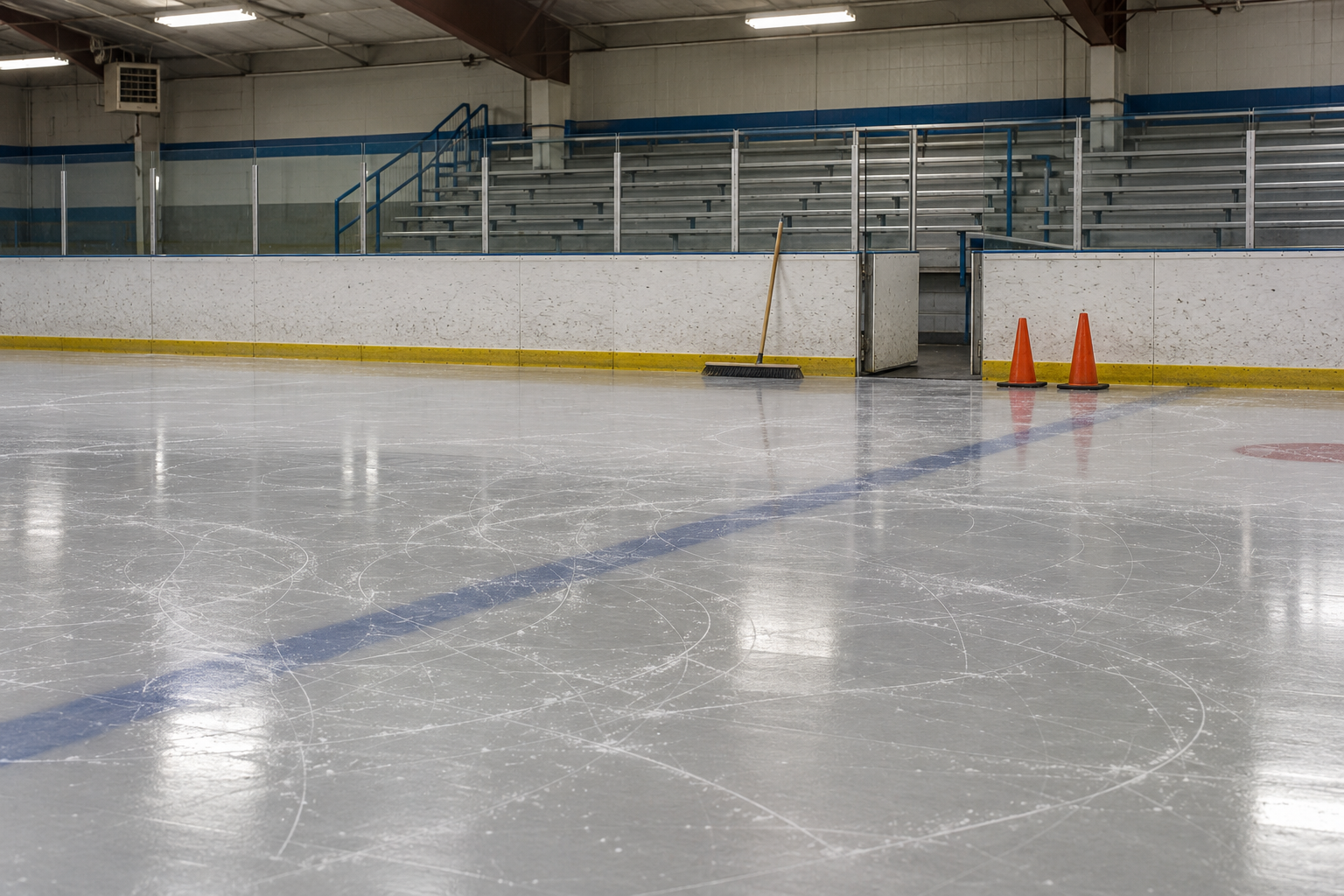
NORTH CARROW, Minnesota — The city arena has closed its smaller rink after fresh skate marks traced turns, passes and stops that youth players said they considered but did not make. The lines appeared beside the players' actual tracks during two practices Tuesday and remained after the ice was scraped and resurfaced.
The closure moves three youth sessions and an adult skating class to the main rink through Friday. Public works staff are inspecting the refrigeration slab and resurfacing equipment, while the arena is refunding one open-skate program. Manager Darcy Nolte said the ice is level and cold enough for use but will remain closed until the extra markings stop forming.
Coach Stephen Arlen noticed the first line during a 12-and-under passing drill. Forward Nia Leduc approached the blue line, looked toward a teammate on her left and passed right. A second blade mark curved left from the point where she turned her head, crossed the circle and ended beside the teammate she had considered using.
Leduc's skates stayed on the right-hand path, and video showed no other player on the second line. She told Arlen she had nearly passed left but changed her mind because a defender moved. The unused route carried the twin edges and shallow toe scrape of her left skate, including a nick made during sharpening last week.
The marks multiplied as practice continued. A defenseman who chose to stop left left a second spray of ice to his right. A goalie remained upright while a narrow pair of grooves showed the butterfly drop he had expected to make. Players could point to the decision associated with most lines before reviewing video, Arlen said.
Arena staff ended the session early after one player followed an unused passing line and collided with the boards. She was not injured. Nolte asked coaches to keep teams off the ice and ran the resurfacer twice, shaving the surface more deeply on the second pass. The rink looked clear until the next group entered for practice.
Skate tracings can remain beneath a thin flood and reappear as new ice freezes, said Keisha Borgen, a refrigeration contractor who examined the rink. Differences in blade pressure and temperature can also create white lines beside a visible cut. Borgen said buried marks would repeat earlier paths, not match decisions reported after a complete shave and new flood.
The second group was not told why the prior practice ended. Its coach asked players to skate ordinary warmup circles and choose direction at each cone. At five cones, both left- and right-turn tracks formed although each player took only one route. Helmet video showed the unused line developing a few inches ahead of the skater and fading behind the heels.
Some players treated the markings as useful. Leduc said seeing the abandoned pass helped her understand how long she had waited before choosing. Arlen declined to use the lines for instruction, saying a visible possibility could pressure children to defend every choice they made during practice. Parents were asked not to film from the closed rink.
City workers tested the main rink with the same resurfacer and found no duplicate tracks. Water temperature, brine pressure and ice thickness were within operating range on both sheets. The smaller rink was built over an outdoor court in 1988, but plans show no separate piping or material beneath the area where the lines appeared.
Before closing Tuesday, Arlen placed cones over two unused routes so nobody would follow them. By Wednesday morning, frost had whitened the actual skate marks and left the alternate lines dark. Each dark line bent around its cone, then returned to the route it had originally traced. The cones had not moved, and the ice beneath them was uncut.