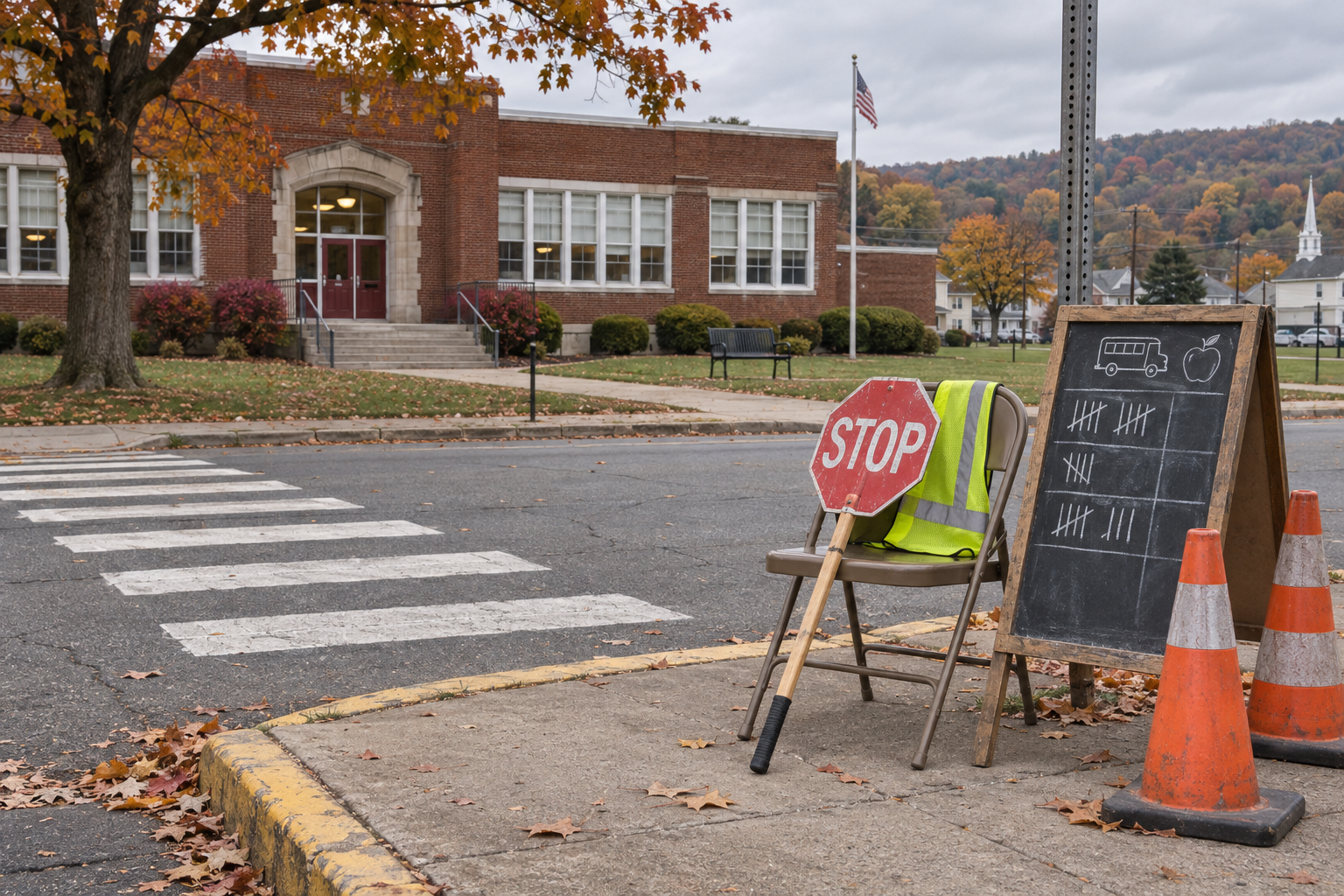
LINDEN RUN, Pennsylvania — The Linden Run School District has assigned a second adult to count pupils at an elementary-school crossing after a third-grade class repeatedly left room for an additional child during dismissal. Staff confirmed that all 22 enrolled pupils were present, yet the line crossed Maple Street in 23 distinct places on four afternoons.
Crossing guard Mara Rusk noticed the open place Monday between students Iva Cole and Len Moss. The children advanced when she raised her paddle but kept about three feet of space between them, matching the distance between classmates elsewhere in the line. Cole looked back twice and waited at the far curb before continuing.
Rusk asked whether someone had fallen behind. Cole said no and replied that the space belonged to the person who always walked there. Moss agreed but could not give the classmate's name or describe clothing, hair or a face. Both became confused when asked which desk the child used, then correctly named every enrolled pupil in their room.
Teacher Elise Voss counted the class in the hallway and again at the exterior door. Twenty-two children left with 22 backpacks and 22 dismissal cards. At the crossing, the line opened between Cole and Moss. Rusk made 23 chalk marks on her board as positions passed, while Voss counted 22 pupils from the opposite curb.
Principal Orin Wynn changed the dismissal route Tuesday so the class used the Pine Street gate. The pupils formed pairs rather than a single line. Cole and Moss walked on opposite sides of an empty middle position, each holding one hand slightly away from the body as if making room for a third person between them.
The district added an administrator at the gate, reviewed attendance records and checked whether a recently withdrawn or absent student might still be part of the class routine. No pupil has left the room this year, and no student was absent on the affected days. Wynn said the second count is intended to keep dismissal orderly, not to ask children to prove whom they believe they are accommodating.
Children can preserve a group habit after a game, seating change or shared classroom story, said Tessa Pike, a child-development consultant who reviewed the district's notes. One child's pause may prompt others to make the same space without a spoken plan. Pike said the repeated placement and the pupils' certainty that the gap belonged to someone were unusual but did not by themselves show distress.
The open place appeared during other routines. At lunch, the class left one chair pulled back from an otherwise full table, though the assigned seats accounted for every child. During recess, a jump-rope group completed 12 turns with nobody entering the rope after Cole called an unfamiliar first name. The children disagreed afterward about what name she had said.
Parents received a notice Wednesday explaining the extra count and asking them not to gather at the crossing. The district has not canceled outdoor activity or changed bus assignments. Two families requested that their children walk with another class, but both pupils asked to remain in the usual line until everyone had crossed.
On Thursday, Voss let the children choose their own order and did not mention the open place. Cole walked near the front and Moss near the rear. The gap formed between two other pupils who had not previously stood together. Rusk counted 22 children and one uninterrupted interval in which the schoolyard gate swung inward far enough for someone to pass.
After the line cleared, a sealed cup of apple slices stood upright beside the far curb. Its lunch label matched no student in the class, and the cafeteria's daily count showed no extra serving. Wynn placed it in the office refrigerator pending a parent inquiry. At dismissal Friday, the children left the same amount of space, but this time it remained beside Rusk all the way across the street.