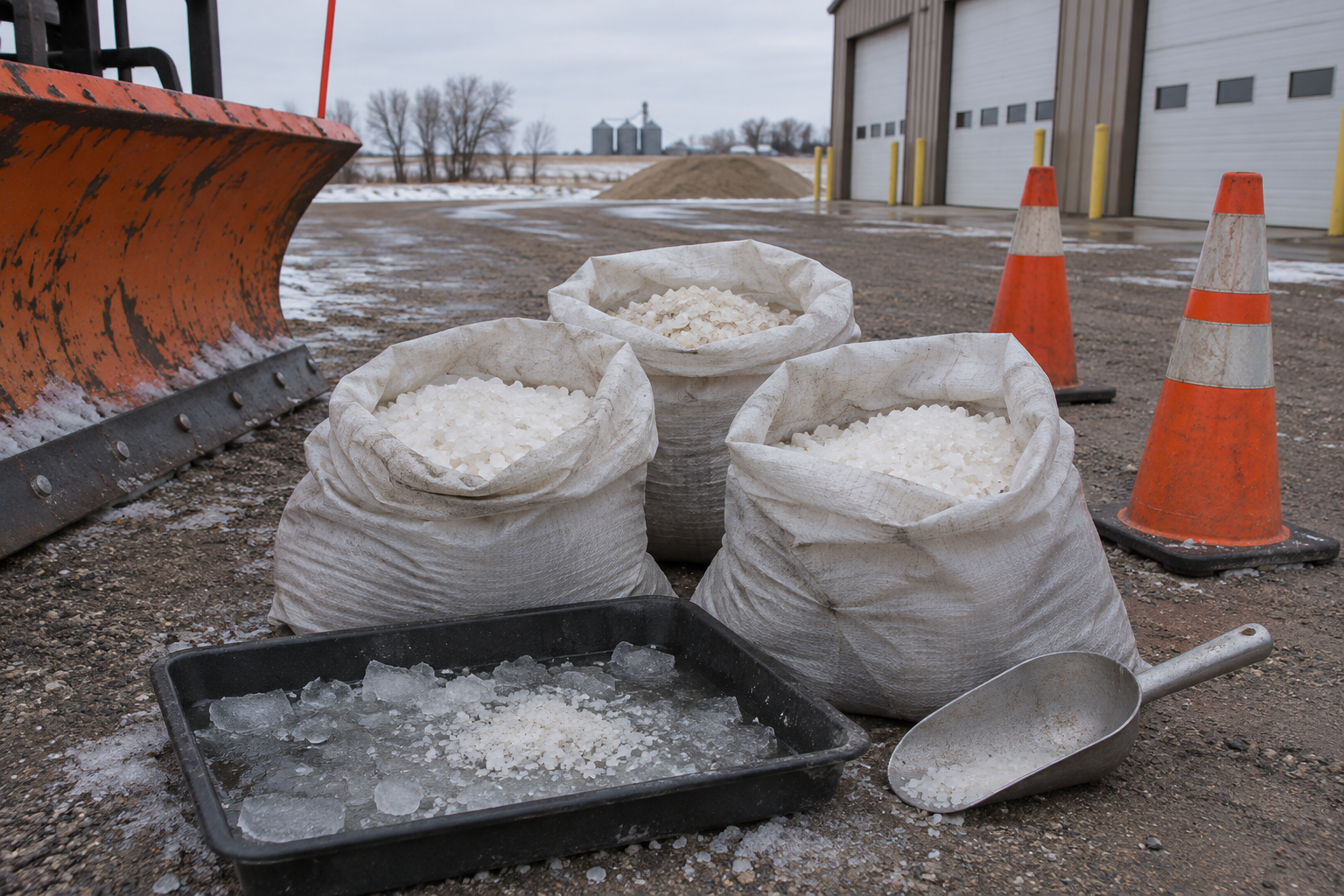
MARDEN, North Dakota — Grayling County has held a 22-ton road-salt shipment after salt spread on new ice at the maintenance yard exposed tire tracks associated with earlier winters. The marks included a school-bus tread used on a route discontinued before the yard was built, according to county records and the retired driver.
The shipment arrived Thursday as part of the county's ordinary winter stock. Road foreman Cal Rusk opened three one-ton sacks and tested a scoop on a shallow tray of water frozen overnight. The ice cleared in parallel bands, but instead of melting flat, it developed compressed tread blocks and a thin ridge of gray slush between them.
Rusk assumed a yard truck had crossed the tray before it froze. The tray is four feet wide and stood on a workbench. Its marks continued beyond both edges onto the concrete floor, where a pair of wet tire tracks curved toward the fuel shed and ended beneath a locked overhead door.
Crews repeated the test on clean ice made from tap water in six smaller pans. Each application produced a different tread. One was a modern county pickup. Another had narrow diagonal lugs that mechanic Lena Voss identified from photographs of a 1978 school bus she drove on the former west route. The bus was scrapped in 1991, and the maintenance yard opened in 1996.
Public works director Elise Cole placed the shipment under a tarp, marked the open sacks and obtained treated sand from a neighboring county for forecast freezing drizzle. Grayling County has enough unaffected salt from an October delivery for bridges and steep grades. Cole said the hold should not change emergency response or school decisions.
Salt can reveal scratches and trapped air as an ice surface melts, said Orin Marr, a materials engineer who reviewed the test photographs. Reused pans may also retain grease patterns from equipment. Marr said those causes would not continue across the floor or produce raised sidewall lettering in ice that had not touched a tire.
The markings did not follow a simple chronology. A grader tread used last winter appeared before the school bus. A third test showed paired farm-truck tires remembered from the 1984 blizzard, when county workers escorted milk deliveries. Two retired employees identified a missing patch in the right tire where a chain had broken, though neither had seen the truck since it was sold.
Voss returned to the yard Saturday and watched a tray develop the west-route bus tread. She said the route once carried 14 children from outlying farms and was shortened after a family moved away. As the salt worked, 14 shallow oval depressions appeared in the ice between the tire tracks, each about the size of a child's boot heel. Voss did not assign names to them.
County purchasing records show the salt came from a regional depot and passed its moisture and purity checks. Other counties received material from the same railcar without reporting unusual melting. The distributor offered to replace Grayling County's share and asked that the opened sacks remain sealed for pickup.
On Sunday, crews swept the visible tracks from the floor and moved the test pans into a locked bay. No additional salt was applied. By morning, a thin skin of clear ice had formed over the dry concrete beneath the tarp, though the building remained above freezing. Tire marks pressed upward from below it and advanced several inches each hour toward the parked plows.
Cole moved the plows outside and left the salt in place for the distributor. At noon, the leading track stopped where the oldest plow had stood. Its right front tire carried a wet gray line around the tread, and a small brass snow-chain hook rested in the groove. Rusk said the truck has used rubber tensioners since the county bought it new.