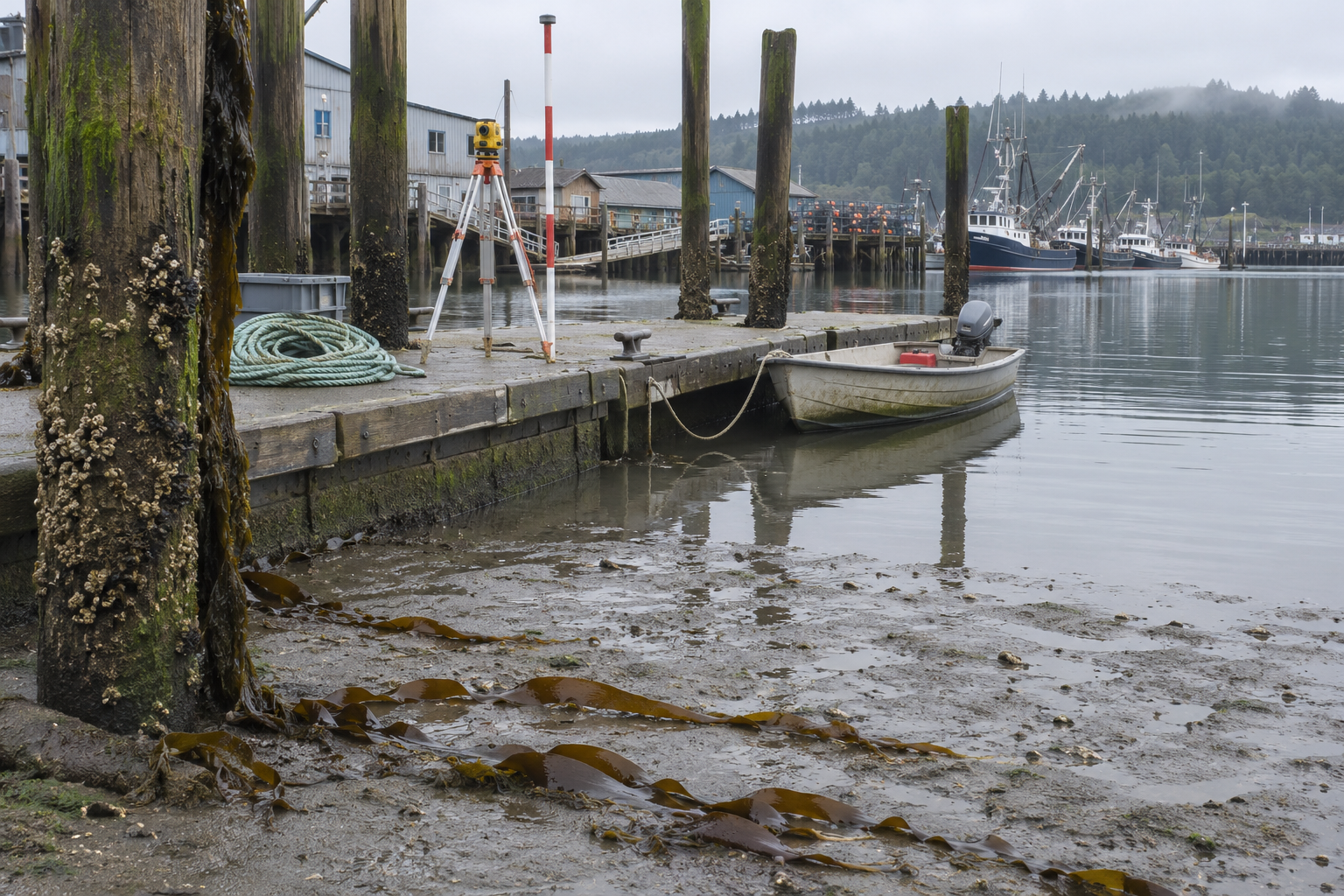
FORT SABLE, Oregon — The Port of Fort Sable has delayed a piling survey after a bed of bull kelp remained suspended at the previous water level while the tide withdrew beneath it. Small crabs and fish continued moving among the fronds inside a section of air about 40 feet long, according to port workers and a marine biologist.
The kelp grows around timber pilings beside the east work float, where the port planned to sound 18 structures for rot before winter repairs. Surveyor Mara Voss arrived near Monday's morning low tide and found the harbor surface about six feet below the float. The kelp canopy remained level with the wet line on the pilings.
Voss first believed the fronds were caught on rope. They were not attached above the mud, and open air was visible between them and the water. Drops fell from the lowest blades, stopped several inches down and spread into thin rounded beads, outlining a boundary that had no netting or solid surface.
Port manager Orin Bell closed the east float and moved the survey skiff to another dock. Fishing vessels can use the main landing, and the delay does not block the channel. Bell said the port will not send a worker beneath the suspended bed or allow visitors onto the float while the pilings remain unexamined.
Bull kelp is held upright by gas-filled floats when submerged and collapses as water leaves it, said Elise Kroll, a marine ecologist who observed the site. Fronds can hang from pilings or lines, and fog may make their height difficult to judge. Kroll said no attachment supported the central bed and the floats were bearing weight in air rather than pulling upward through water.
The suspended section retained ordinary marine life. Kroll counted three juvenile rockfish moving between the blades with the tail motions used for slow swimming. A shore crab crossed from one frond to another without falling. Barnacles below the wet line closed as expected, while those within the raised bed remained open and extended feeding appendages into apparently empty air.
The boundary could be felt but not seen. A survey pole passed through it with little resistance and emerged wet to a precise line. Above that line the pole remained dry. Voss lowered a weighted tape from the float; the weight slowed inside the bed, swung with the kelp and then dropped normally when it passed through the lower edge.
At 11:18 a.m., the incoming tide reached the bottom of the suspended section. The two surfaces joined without a splash. The kelp settled into the harbor and the fish dispersed, leaving no pocket or visible film. Workers found no unusual temperature, salinity or residue in water samples taken from the joined area.
The bed rose again with the afternoon tide and appeared ordinary at high water. Bell left the float closed overnight and asked crews to document the next low tide from shore. Tuesday morning, most kelp fell with the water as expected. A smaller group beside piling 12 remained six feet above the exposed mud.
Two harbor seals approached the boundary from below and turned away before surfacing. Gulls landed on the float but did not enter the suspended bed. The juvenile rockfish were again visible among the blades, though the port had not marked them and Kroll could not establish whether they were the same fish seen Monday.
The survey team left its notebook open on the float while measuring the smaller section from shore. A shore crab moved across three hanging fronds and stepped into the air beyond the last blade. It continued sideways for about a foot with no visible support, then stopped above the notebook. Water dripped from its legs onto the piling diagram before it turned and walked back into the kelp.