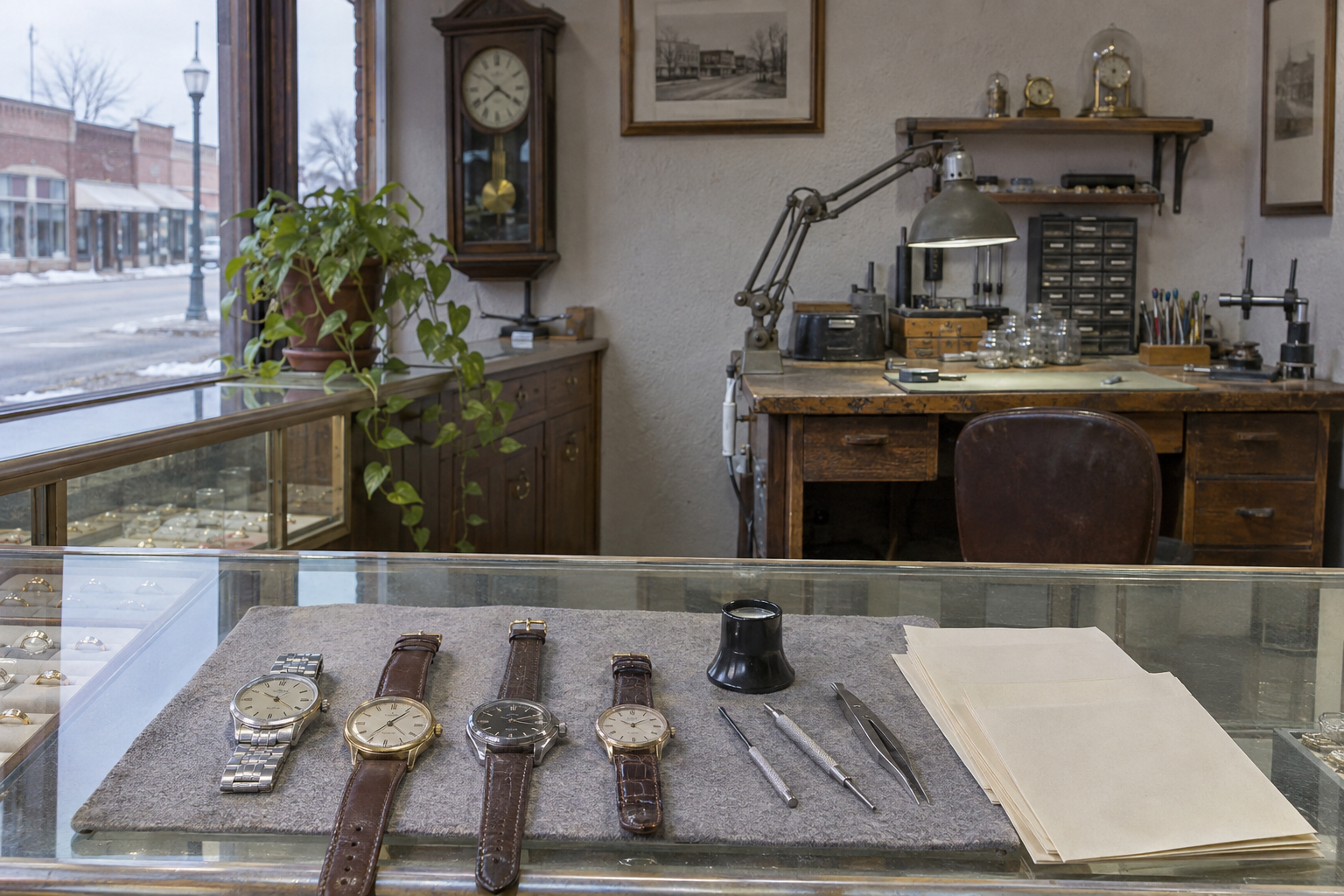
DOVE CREEK, Nebraska — A downtown watch shop has delayed six pickups after repaired watches kept time only while their owners were working. The watches stopped during sleep and leisure but continued through unpaid care, cooking and farm chores, prompting several customers to dispute what the movements appeared to count.
Dove Creek Watch & Jewelry completed the jobs between Monday and Thursday. They included battery replacements, two cleaned mechanical movements and a new crystal. Owner Cal Voss tested each watch for at least 12 hours on the bench, where all six remained within ordinary tolerances before customers collected them.
The first return came Friday from grocery clerk Rosa Noll. Her watch had advanced eight hours during a shift and stopped at 5:03 p.m., the minute she removed her apron. It remained stopped while she drove home and ate, then resumed while she washed dishes, packed two school lunches and reviewed her mother's medication box.
Noll assumed the new battery had a loose contact. She placed the watch on the kitchen counter, where the second hand continued as she worked nearby and stopped when she sat down. Her wall clock and phone kept ordinary time. By Saturday morning, the watch was five hours and 41 minutes behind but showed the length of the tasks she had completed.
Other customers reported different boundaries. A farmhand's watch ran while he repaired fence on his own land after his paid shift. A bookkeeper's stopped during a required office luncheon and resumed when she returned to invoices. One retired customer saw no movement until he began helping a neighbor install a wheelchair ramp.
Voss asked the remaining customers to leave their watches at the shop and offered refunds or loaner clocks. He said he will not use the readings to settle timecards, contract hours or family disagreements. The store remains open for jewelry sales and ordinary battery changes, though completed watch jobs will stay on the counter through Monday.
Mechanical movements can stop when a wrist changes position, while weak batteries and dirty contacts can create intermittent operation, said Iva Cole, a horology instructor who reviewed photographs and service notes. Cole said those faults might correspond loosely to activity but would not distinguish a lunch meeting from invoice work or continue while a watch lay on a counter.
The watches did not agree on the same definition of work. Noll's counted care for her mother and household chores. The farmhand's stopped while he attended a paid safety briefing but ran during his unpaid drive between fields. A teenager's watch advanced through algebra homework and paused during a paid hour watching the front desk at a motel.
Customers reacted less to lost clock time than to the division. Noll's brother said the medication and lunches were family responsibilities, not work. Noll replied that the watch had no trouble recognizing them. The retired customer asked Voss not to repair his again; he said the three hours recorded at the ramp felt more accurate than his calendar had.
Voss opened all six cases Saturday afternoon. The batteries, gears and seals remained as installed, and the hands advanced normally when he handled the movements with tools. Once he set each watch down, it followed its owner elsewhere in town. Phone calls placed with the customers confirmed the starts and stops within a minute.
Near closing, Voss began writing refund envelopes and his father's old bench watch started for the first time since 2019. It ran while he completed the envelopes, swept glass filings and called each customer. When he turned off the bench lamp and sat in the front window, it stopped at 6:18. Voss left it beside the six held repairs rather than winding it.