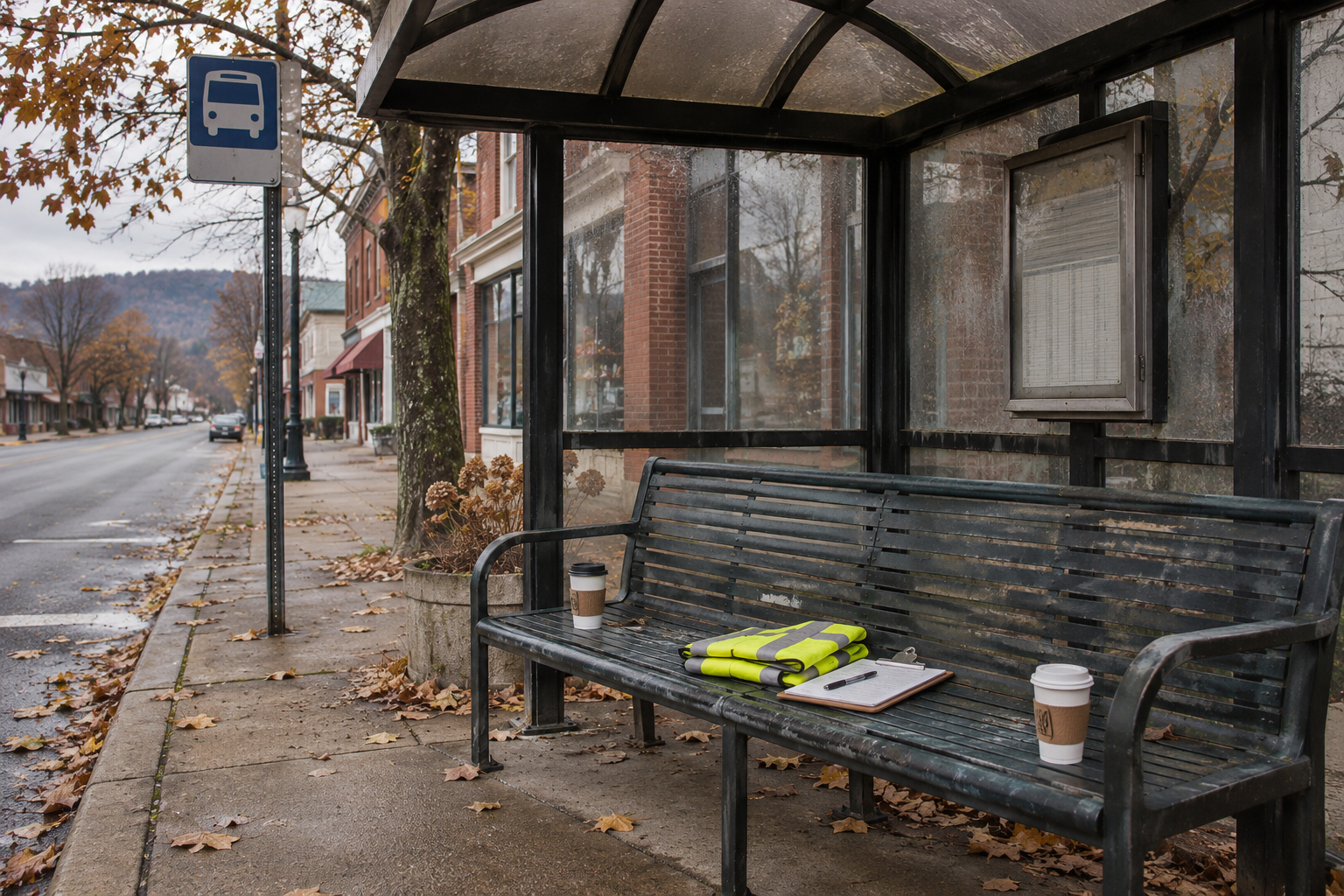
CLOVER JUNCTION, Pennsylvania — The borough has assigned an attendant to two downtown bus stops after 14 riders recognized strangers as close relatives and described detailed family memories that the other person also remembered differently. No one was harmed, but three passengers missed buses while trying to establish whether they knew one another.
The first report came Friday morning at the Market Street shelter. College student Nila Marr said an older woman entered, called her “Rosie” and asked why she had cut her hair. Marr had never met the woman, yet immediately recognized her as an aunt who used to bring lemon drops to church and keep spare buttons in a blue tin.
The older rider, Elise Wynn, has no niece named Rosie. Wynn identified Marr from childhood summers at a lake in western Pennsylvania; Marr remembered the same dock, rowboat and screen porch, but placed them in Minnesota with different parents. Each could describe a burn mark on the porch table. Their descriptions of how it happened did not agree.
Similar encounters followed at Market Street and the courthouse stop. A delivery driver greeted a retired teacher as his older brother, while the teacher knew him as a neighbor's son who died in infancy. Two women waiting for the Route 4 bus each believed the other had been maid of honor at her wedding. Their wedding photographs show different attendants.
Transit supervisor Iva Cole asked drivers not to settle identity disputes or delay buses beyond the normal boarding period. The borough added an attendant with a radio, seating chart and first-aid training, and placed cards in the shelters advising riders who felt confused to step away from traffic and call someone they knew. Service continued on schedule.
The recognition usually began after people sat on the same bench and weakened when one stood. It did not depend on eye contact. One rider recognized a man's cough before seeing his face; another felt certain a stranger was her father while facing the timetable. Riders continued to know their own names, addresses and actual families.
Strong familiarity can attach to an unfamiliar face during fatigue, grief, migraine or a brief memory error, said Soren Pike, a cognitive therapist who reviewed anonymized accounts for the borough. People may then supply details that make the feeling coherent. Pike said reciprocal recognition with matching physical details would be unusual, especially when the family roles conflict.
Borough staff checked for exhaust, solvents and a faulty shelter heater. Air readings were ordinary, and the heater had been disconnected since spring. The two shelters were made by different companies and share no electrical circuit. Recognition has not been reported on buses or at three uncovered stops along the same route.
Several encounters were comforting despite the confusion. Wynn and Marr spoke for 20 minutes about the porch neither family owned. Each remembered a dog sleeping beneath it, though one called the dog Abel and the other called it June. They agreed on the white patch over its left eye and the sound its collar made against the steps.
The attendant began keeping separate statements rather than allowing riders to compare memories first. On Monday, two strangers independently drew the same narrow kitchen with a stove beside the back door. One described it as his grandmother's house in Scranton; the other said it belonged to an aunt near Erie. Neither address has that arrangement in current property photographs.
Wynn and Marr returned to the Market Street shelter Tuesday, each saying she only intended to catch her usual bus. Wynn carried coffee with one sugar for Marr, though they had not discussed coffee during their first meeting. Marr brought a second cup, black, which Wynn said was the way her late sister took it. They sat at opposite ends of the bench and left both cups between them when their separate buses arrived.