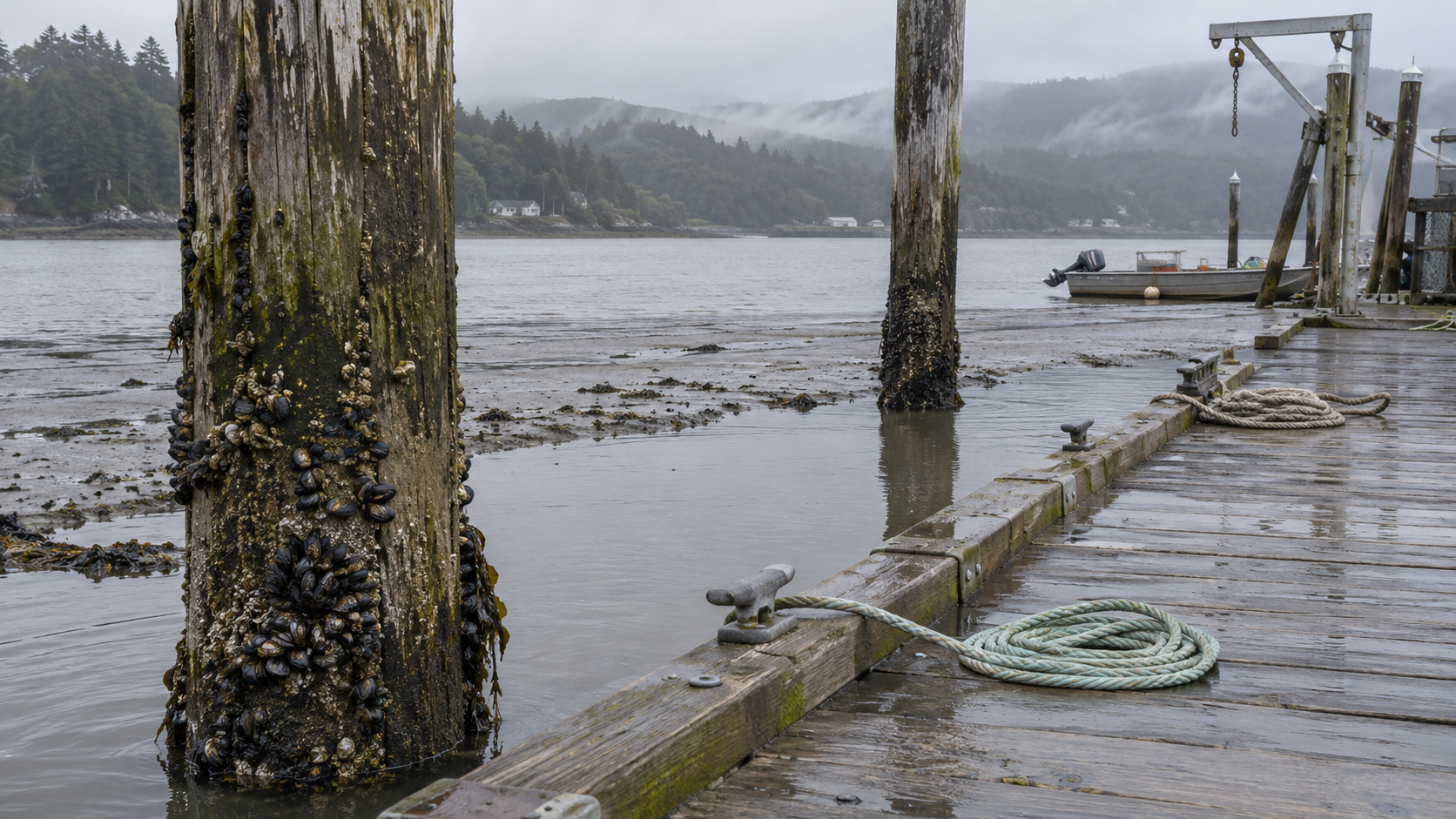
CINDER BAY, Oregon — The port district has closed a maintenance float after thousands of bay mussels left their usual bands on timber pilings and attached themselves to dry rails, cleats and ladder rungs above the high-tide line. The animals remained alive through Sunday's low tide, and the district has asked crews not to scrape or relocate them.
Mechanic Iva Cole found the first clusters before dawn Saturday while walking to a pump shed. The lower five feet of six pilings were nearly bare, showing pale scars where mussels had been fixed the previous afternoon. Above those scars, black shells covered the dry wood in broad diagonal bands reaching shoulder height.
Additional mussels had crossed onto the floating dock. They crowded the undersides of handrails, the base of a hose reel and three steel cleats that had not been submerged during the month's highest tide. Cole said the shells were closed but did not smell dead. Several opened briefly when spray reached them from a wash hose.
Port manager Nessa Orr blocked the float and moved a maintenance skiff to the public landing. Fuel service continued at the main pier, though two repair jobs were postponed because workers could not reach the pump shed without stepping near the clusters. The district also suspended pressure washing to avoid sending detached mussels into the travel lift.
Bay mussels anchor themselves with strong byssal threads and can make small adjustments when crowded, exposed or disturbed, said Len Voss, a marine ecologist who inspected the pilings. Larvae settle on new surfaces, and storms may lift adult clumps. Voss said adult mussels do not ordinarily climb several feet of dry timber together during calm weather.
No storm or unusual tide was recorded Friday night. A harbor camera showed the pilings at 11 p.m. with their ordinary dark bands near the water. Fog obscured the view after midnight. At 3:18 a.m., the bands were visible above the float, though the recording did not show individual shells moving across the intervening wood.
The clusters were not randomly placed. Every shell's hinge faced roughly inland, including mussels attached beneath horizontal rails. Their byssal threads were fresh and flexible, and the pale scars below remained threaded with older fibers. Staff found no trail of crushed shells, bird feeding or tool marks between the two levels.
The closure has drawn onlookers to the public landing across the basin. Orr asked visitors not to board work floats or collect shellfish from port structures, which are not approved harvest areas. The district will leave the animals in place while state biologists review photographs and temperature readings; no transplant or public display is planned.
At Sunday's low tide, the elevated mussels opened in sequence from the seaward end of the float to the pump shed. Each remained dry. The opening passed through the clusters at about the speed of a gentle wave, then returned in the opposite direction. Mussels still at the waterline did not open with them.
Workers removed one detachable ladder on Saturday before the closure widened. Its upper rung held 43 mussels, and its lower rungs were bare. The ladder was laid flat inside a locked gear cage, with the cluster facing east. By Sunday morning, all 43 had reattached along the ladder's inland-facing side rail without leaving the cage.
The shells on the pilings remained above the float Monday as rain began. Beneath them, the old tidal bands were clean except for one mussel fixed at the ordinary waterline. Its shell faced seaward. When the tide rose around it, the elevated clusters closed together, while the single lower shell stayed open.