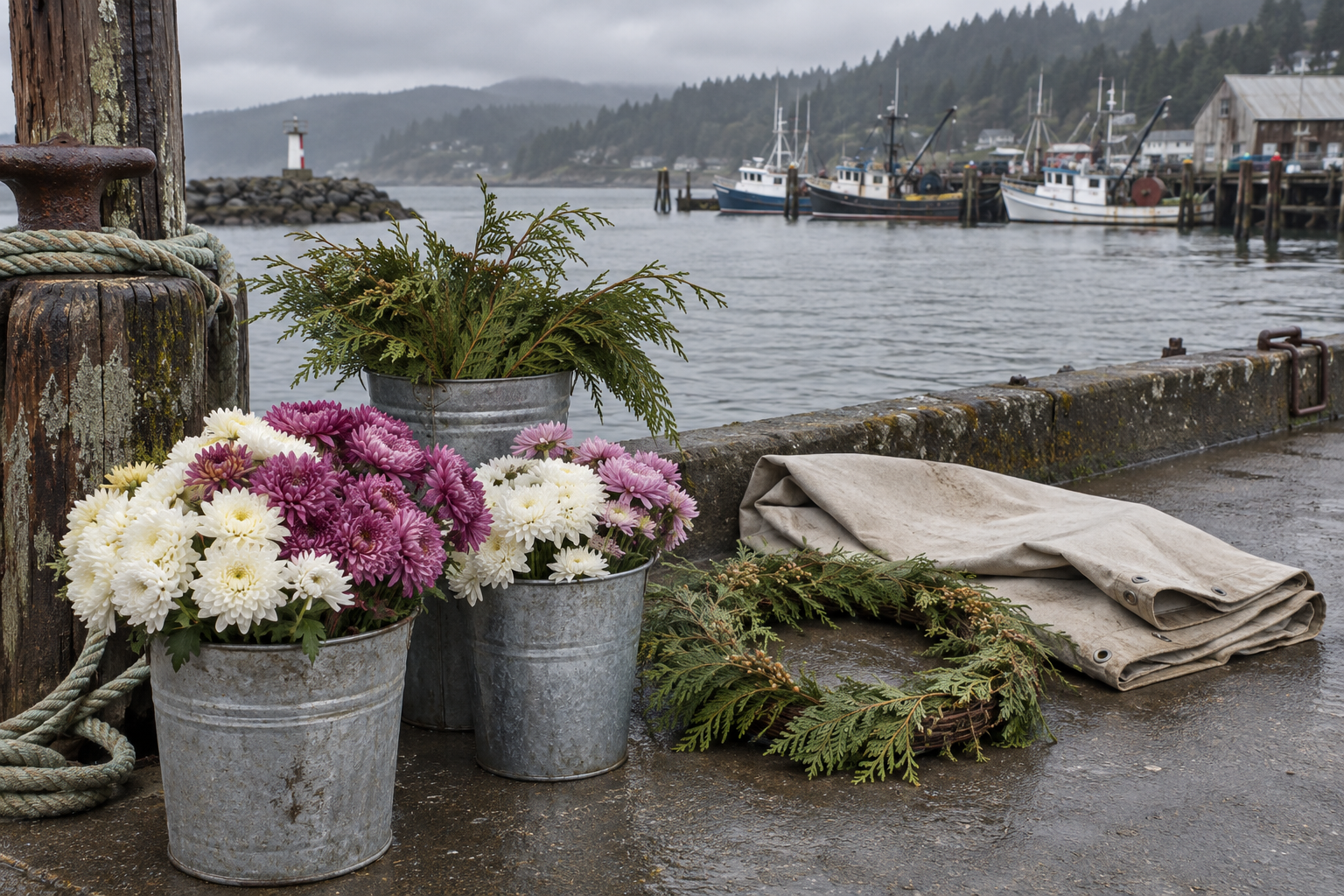
BELLWETHER BAY, Oregon — Bellwether Bay moved its annual fishermen's memorial from the west pier to the seawall Sunday after flowers released during a private rehearsal returned overnight to the homes of the people who placed them in the water. The blossoms remained fresh and carried harbor water but left no trail from the shore.
The harbor association has held the November observance for 28 years, naming local crew members lost at sea and allowing relatives to release chrysanthemums, carnations and cedar sprigs on the outgoing tide. This year's public ceremony was expected to draw about 90 people. It proceeded without a water release, using flowers laid along the seawall instead.
Six volunteers rehearsed Friday afternoon to confirm the reading order and test a new canvas safety rail. Each placed one marked flower into the bay. Harbor secretary Mara Wynn watched the stems drift beyond the fuel dock before the group stored the remaining buckets and left for the evening.
At 5:40 a.m. Saturday, volunteer Nessa Cole found her white chrysanthemum on the mat outside her apartment. The bloom was open and unbruised. Its stem was wet with salt water and still carried the narrow blue cotton thread she had tied below the leaves. Cole lives three blocks uphill from the harbor in a secured building.
The other five flowers were found at their volunteers' homes: two on porches, one in a mailbox, one balanced across a bicycle basket and one inside a screened mudroom. None of the residents reported an overnight visitor. A doorbell camera at one house showed the empty step at 3:11 a.m. and the flower in place at 3:12, without recording movement between frames.
Association chair Orin Bell canceled a second rehearsal and asked families not to put flowers in the water. The change did not alter the name reading, bell toll or collection for the volunteer rescue fund. Bell said the observance belongs to the families and should not become a test of whether the flowers return.
Wind and a reversing tide can carry floating material back into a harbor, said Elise Voss, a coastal engineer who reviewed the release location. Gulls also move vegetation and small objects. Voss said those processes could return flowers to shore but would not place six marked stems at separate addresses above the waterfront.
The volunteers did not interpret the returns alike. Cole, whose brother was lost in 2018, called it an unwelcome delivery and left the flower in a covered bucket. Retired deckhand Len Moss placed his returned carnation in a kitchen glass. He said it was the first memorial flower connected to his father that he had been able to keep.
Harbor staff checked the remaining flowers for thread, tags or tracking devices and found none beyond the six marks added for rehearsal. The storage shed had remained locked. Water in the returned stems' paper sleeves contained the same low salinity measured inside the harbor, along with fine black sand common at the west pier.
During Sunday's observance, families placed 74 flowers and cedar sprigs along the seawall. Several people took their flowers home afterward. Others left them facing the bay. The association will compost what remains Monday rather than send it onto the tide, Bell said.
At high water Sunday afternoon, the flowers along the wall shifted without crossing the curb. Stems turned landward until every bloom faced the harbor. Cole's chrysanthemum, still in the covered bucket at her apartment, bent beneath the lid at the same time. When she opened it, the flower was upright against the side nearest the water.