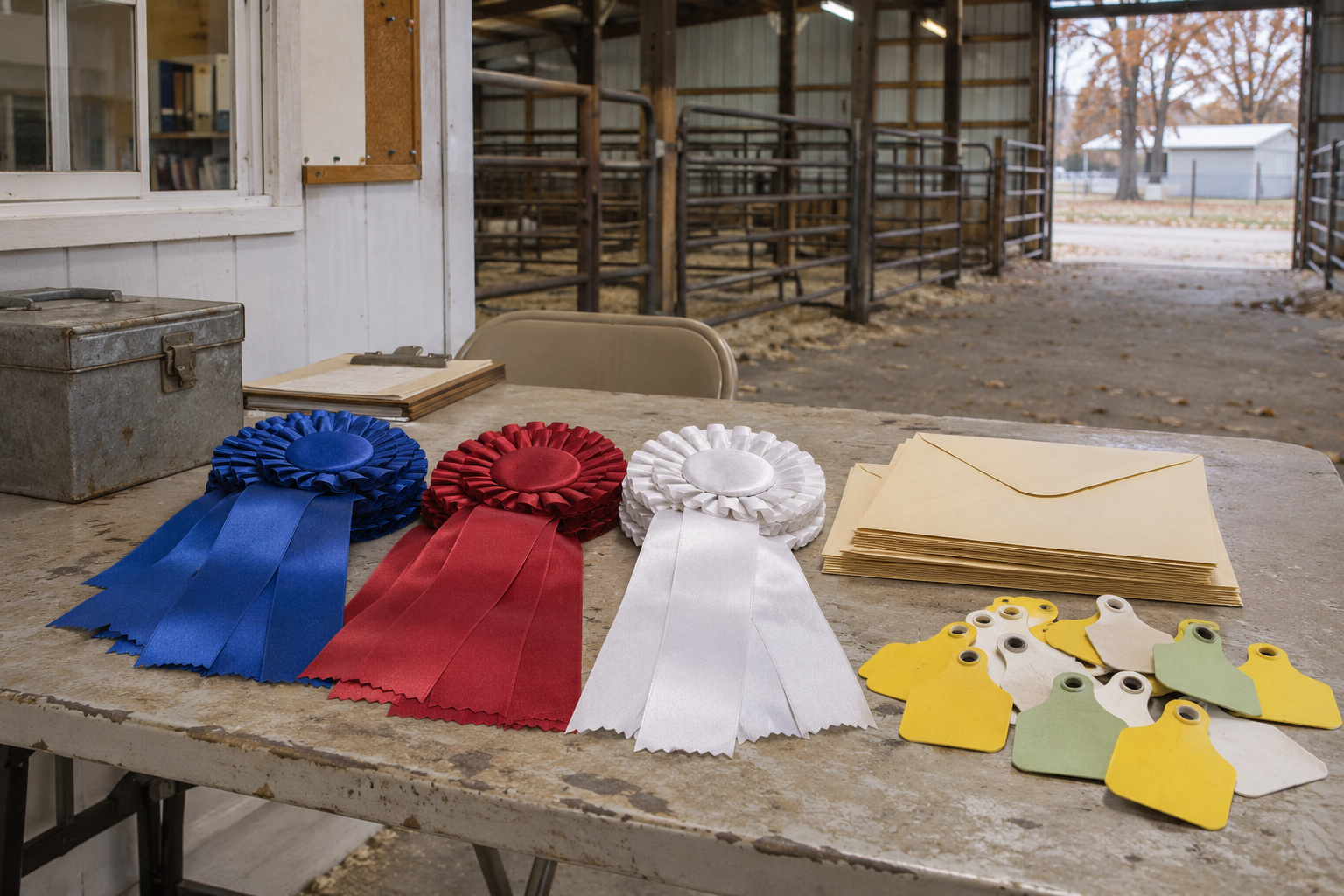
ALDER PLAIN, Nebraska — The county fair board has delayed 27 junior-livestock premium payments after stored prize ribbons lost their color and matching rosette patterns appeared on animals, equipment and clothing associated with preparing entries for the August show. Formal placings have not changed, board chair Jody Fenner said.
The affected premiums total $1,460 and were discovered during the fair office's year-end reconciliation. Checks for other classes have been mailed. Fenner said every exhibitor will be paid once the board confirms amounts and contacts families, but replacement ribbons will not be issued while the original colors continue to shift.
Secretary Milton Shaw opened the ribbon box Monday and found 11 blue, nine red and seven white rosettes faded to the same pale gray. Their printed centers and paper labels remained legible. The satin was dry and showed no bleaching, water damage or mold, and ribbons stored in an adjacent box retained their colors.
That afternoon, exhibitor Casey Dorr reported a blue rosette-shaped patch in the hair of a border collie that had helped move her steer at home. The dog was not entered at the fair. The patch consisted of blue hair rather than dye on the surface and included two narrow bands descending the shoulder like ribbon tails.
Other families found colors in different places. A red pleated circle appeared in rust on the hinge of a wash-rack gate that had held during a loose-calf incident. White bands formed in the leather of a teenager's work boots. A blue spiral appeared in the coat of an older cow that stood beside a nervous heifer each morning before the show.
The markings did not follow the official results. Dorr's steer placed second, while the faded ribbon associated with its lot had been red. The blue color on the dog matched no class in which the family competed. Fenner asked families not to clip hair, sand equipment or treat leather until the fair veterinarian and insurer complete photographs.
Livestock products, chalk, laundry agents and sun exposure can transfer color or change hair, said Paige Evers, a county extension educator who visited two farms. Repeated pressure can also leave circular wear on leather or metal. Evers said those causes would not account for pleats forming in growing hair or for pigment leaving stored ribbons without staining the box.
Several exhibitors recognized the marked items as part of work that judges never saw. The boots belonged to a student who cleaned pens for another family after her own animal became ill. The gate had stopped a calf before it reached the midway. The older cow had no registration papers and remained at home because she no longer carried a calf.
Families disagreed about whether the new colors should be treated as awards. Dorr said the dog had done his ordinary work and did not need a ribbon. Another parent asked the board to keep the premiums tied to published placings so children would not believe private labor could be ranked after the event. Fenner said the board has no authority to judge animals or objects outside entered classes.
On Tuesday, staff placed the faded ribbons in separate archival sleeves and matched each label to its premium envelope. As each envelope was sealed, one corresponding color briefly returned to the satin, then drained toward the cut ends and disappeared. The money orders inside remained correct and showed no staining.
The board left all 27 envelopes unmailed overnight. Wednesday morning, a blue pleated circle had formed in dust on the office floor beneath the chair used by volunteer treasurer Dan Holt, who stayed three late nights balancing the fair books. Holt swept around it before opening. By noon the mark remained undisturbed, and the blue ribbon assigned to the grand champion steer was white except for one restored thread.